
What Is the Best Organic Spirulina for Buyers in 2026?

Interest in spirulina is expanding, but market growth alone cannot identify a trustworthy product. Grand View Research estimated the global spirulina market at about US$0.5 billion in 2023 and projected growth through 2030. Its estimate covers spirulina products broadly, not organic products alone. That distinction matters when comparing supplier claims.

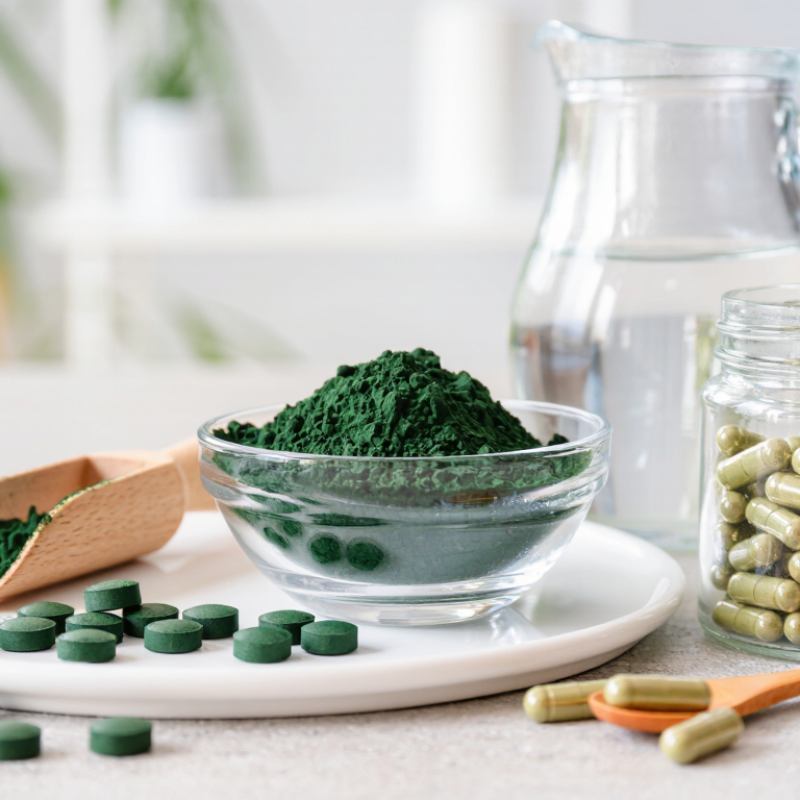
Organic Spirulina is often sold as vivid green powder, tablets, or capsules. A label tells only part of the story. Buyers should check the certification scope, country of origin, processing method, and batch-specific test results. The FAO’s 2024 report on world fisheries and aquaculture recorded 37.8 million tonnes of algae production in 2022, mainly seaweeds. This figure is useful context, not a measure of spirulina output. Different products, different scales.

For a practical comparison in 2026, look for traceability and independent testing for heavy metals and microcystins, alongside clear storage and freshness information. Ask whether testing applies to the finished batch, not just the raw material. A certificate of analysis helps, but its value depends on the laboratory, methods, and date. Even a careful checklist has limits. Certification standards and test details can vary by market and supplier, so buyers should verify documents rather than rely on attractive packaging or broad health claims.
What Is the Best Organic Spirulina for Buyers in 2026?

Spirulina Defined: Cyanobacteria and Its Typical 55–70% Dry-Weight Protein

Spirulina is a blue-green cyanobacterium, not a true plant. The name commonly refers to Arthrospira species, which grow in water and are dried into powders or tablets. On a dry-weight basis, spirulina often contains about 55–70% protein. That figure describes the dried material, not a typical spoonful as served. Numbers need context.

For example, five grams of powder at 60% protein would provide roughly three grams of protein. Actual values vary with cultivation, processing, and testing methods, so check the product’s nutrition panel. I would not treat the headline percentage as a guarantee. It is a useful comparison, but not the whole story.

Tips: Compare protein per serving, not just dry-weight percentages. For organic options, review certification details and look for batch-specific testing for contaminants such as heavy metals and microcystins. A careful label check takes a little longer; it can reveal more than a striking number on the front.

Organic Certification: USDA “Organic” Labeling Requires at Least 95% Organic Content

For buyers comparing organic spirulina in 2026, the word “organic” on a package needs context. Under USDA rules, a product labeled “organic” generally must contain at least 95% organically produced ingredients, excluding water and salt. The remaining ingredients must meet applicable requirements. Certification also involves production and handling standards, not simply a supplier’s claim about how algae was grown.

Check the product label for the certifier and the organic ingredient statement. For plain spirulina powder, the ingredient list should be simple; an added flavor or carrier can change what the percentage means. Keep the package nearby when comparing products. A vivid green color alone proves little, and a mild sea-like smell is not a certification test. Look for clear sourcing and batch information, and ask the seller for current documentation if details are missing. Certification is useful. It is not a freshness guarantee. I would weigh it alongside sealed packaging, a reasonable best-by date, and transparent handling information. Some labels make this harder than it should be. That is worth questioning.

What Is the Best Organic Spirulina for Buyers in 2026?

USDA standards generally require at least 95% organic ingredients for the “Organic” label and at least 70% for “Made with Organic” claims. These percentages exclude water and salt. Use the thresholds to assess label claims; the chart does not represent measurements of specific spirulina products.

Cultivation and Processing: How Water, Harvesting, and Drying Shape Product Quality

Organic spirulina quality starts with the water in which it grows. Ask whether cultivation water is routinely tested for contaminants and whether results are available for individual batches. Clear-looking water alone proves little. Temperature, nutrient balance, and careful pond or tank management also affect growth and consistency. Organic certification can describe production practices, but it does not replace product-specific quality checks.

Harvesting matters, too. A clean, well-managed process helps limit unwanted material as the dense blue-green culture is separated from water. Ask how equipment is cleaned and how quickly harvested spirulina moves to drying. Delays can leave more time for quality to change. Small details matter. A supplier should be able to explain its process without relying only on broad claims.

Drying must remove moisture while protecting the powder’s color, aroma, and nutrients. Methods differ, and no single temperature tells the whole story; time, airflow, and handling count as well. Look for batch testing, clear storage guidance, and packaging that limits exposure to moisture and light. A mild, fresh scent is a useful observation, not proof of purity. I would still want test records before judging a product. Perfect-sounding claims deserve a closer look.

Safety Verification: Review Batch COAs for Microcystins, Metals, and Microbial Results

Organic certification describes farming and processing practices; it does not, by itself, prove a spirulina batch is free from contaminants. Ask for a certificate of analysis (COA) tied to the exact lot number printed on the package. Check the sample date, laboratory identity, test methods, and units. A generic, undated report is weak evidence.

Numbers need context. For microcystins, look for a stated result and reporting limit, not merely “pass.” Review metals such as lead, cadmium, arsenic, and mercury, while checking whether results are reported per gram or per serving.

Microbial results matter too. Look for tests covering relevant pathogens and indicator organisms, with clear methods and numerical findings where available. “Not detected” means below that method’s detection limit, not necessarily absolute zero. Compare results with applicable food-safety criteria, and ask the seller or manufacturer to explain unclear units or missing tests.

Ask for clarification. Reliable documentation should match the batch, identify who tested it, and show when testing occurred. I would pause if the COA omits methods or covers a different lot, even when the packaging looks polished. That check is imperfect: sampling cannot inspect every scoop, and reports can be hard to interpret. Still, a traceable, recent COA gives buyers a practical basis for comparing organic spirulina in 2026.

Buyer Comparison for 2026: Assess Form, Phycocyanin Data, Traceability, and Price

For buyers comparing organic spirulina in 2026, start with the form that fits your routine. Powder is easy to blend into a smoothie, but its earthy taste can be strong. Tablets travel neatly and avoid the mixing step. Check the ingredient list for fillers, and confirm that organic certification applies to the product and its source. Small details matter.

Phycocyanin figures can help compare products, but only when the testing is clear. Look for a recent, lot-specific report that names the test method and lab. A single percentage without context is hard to interpret. Traceability matters too: useful records identify the cultivation region, harvest lot, and processing steps, such as drying. Price is best compared per serving, not per package. A low price may reflect a smaller amount or limited testing—not necessarily poor quality.

Tips: Request the certificate and a batch report before buying. Compare serving size, phycocyanin data, and shipping cost side by side. I still find label comparisons imperfect; methods and reporting can differ, so avoid treating one number as a complete quality score.