How to Choose the Best Dental Guard in 2026?
Choosing the Best Dental Guard in 2026 starts with one question: what do you need it to protect? A guard for nighttime teeth grinding serves a different purpose from one worn during contact sports. Fit matters, too. A loose guard can shift while you sleep or play. One that feels bulky may end up in a drawer. Not ideal.
Dr. Matthew Messina, DDS, an American Dental Association spokesperson, has discussed mouthguards as a practical way to help protect teeth during sports. The ADA recommends mouthguards for activities that could cause mouth injuries. That guidance is useful, but it does not make every product right for every person. A sports guard is not automatically suitable for grinding, and persistent jaw pain deserves a dentist’s attention.
This guide compares common Dental Guard types, including ready-made, boil-and-bite, and custom-fitted options. It looks at fit, comfort, materials, cleaning, durability, and cost. Think about real details: Can you speak clearly? Does the guard stay in place? Can you clean it without leaving residue in its grooves? Small things matter.
There is no perfect choice for everyone. Even a well-reviewed guard may feel wrong after a few nights. A dentist can assess your bite, symptoms, and intended use, then help you choose safely. Use the sections ahead to weigh the evidence—and question claims that promise a universal fix.
Identify Why You Need a Dental Guard
Before choosing a dental guard, identify the problem it should address. Do you wake with a sore jaw, notice flattened teeth, or play a contact sport? Nighttime grinding and clenching can wear teeth and strain jaw muscles, but morning pain alone does not confirm bruxism. It can have other causes. A dentist can check for wear, cracks, and bite changes.
The National Institute of Dental and Craniofacial Research estimates that temporomandibular disorders affect 5% to 12% of people. Jaw discomfort may be related, but a guard is not a universal treatment. For sports, protection is a different priority: the American Dental Association reports that mouthguards help prevent an estimated 200,000 oral injuries each year in high school and college football. The right guard depends on the risk, fit, and advice from a dental professional.
Tips: Note when symptoms occur and which teeth feel sensitive. Bring that detail to your appointment. For sports, choose a guard that stays in place while you speak and breathe. A loose fit is not a small detail. A guard can protect teeth, but it may not solve the cause of grinding or jaw pain.
Compare Dental Guard Types and Materials
Dental guards are not interchangeable.
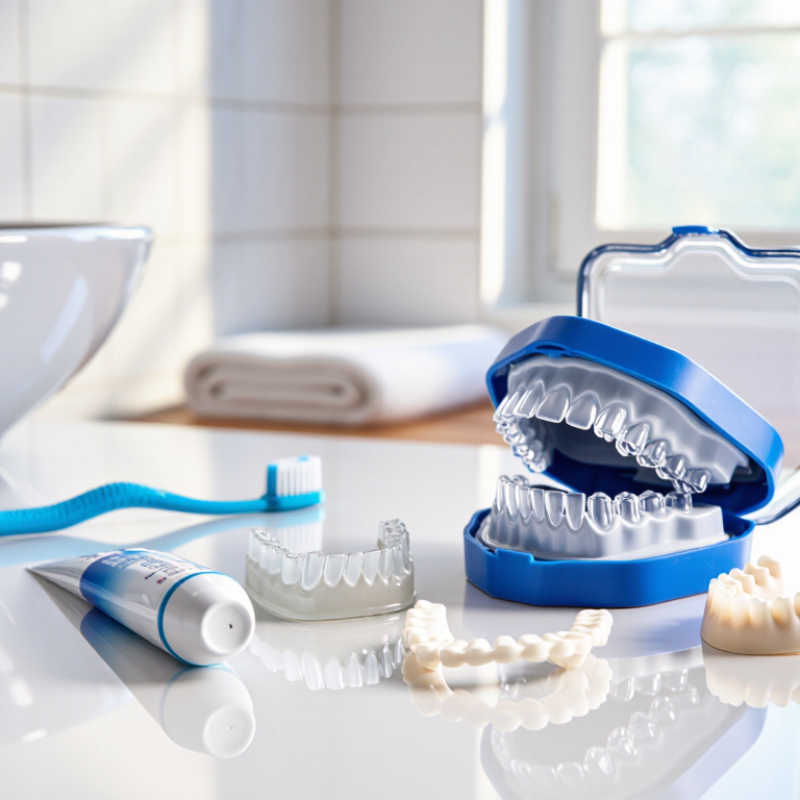
A sports guard cushions impact, while a night guard manages tooth contact from clenching or grinding. Stock guards are inexpensive and ready to wear, but their fixed shape can feel bulky. Boil-and-bite models soften in hot water and mold around teeth; a rushed fitting may leave thin spots or a loose edge. Custom guards are made from dental impressions, giving a closer fit, though they usually cost more.
Fit matters.
Material should match the job. Flexible ethylene-vinyl acetate (EVA) is common in sports guards because it absorbs impact; thicker layers can add cushioning but may make breathing and speaking harder. Night guards may use softer, dual-layer materials or rigid acrylic, depending on symptoms, bite, and dental advice.
A 2007 review in Sports Medicine by Knapik and colleagues found athletes without mouthguards had about 1.6 to 1.9 times the risk of orofacial injury. That finding supports sports protection, not a promise against every injury.
If you wake with jaw pain, cracked teeth, or a guard that shifts, ask a dentist to check the fit and cause. Comfort can take adjustment.
Don’t ignore soreness.
Evaluate Fit, Comfort, and Protection
Choosing the best dental guard in 2026 starts with the way it fits. Begin with fit. A properly seated guard should stay in place without constant biting or adjustment. It should not pinch your gums, trigger gagging, or make breathing difficult. Pressure in one spot is worth noticing. A snug fit should not feel painful.
The right protection depends on why you need a guard. For nighttime grinding, ask a dentist whether a store-bought or professionally made option suits your teeth and bite. A dental exam can identify issues such as worn enamel, jaw discomfort, or dental work that may affect fit. For sports, choose a guard designed for the activity and follow its fitting instructions. Thickness alone does not tell you how well a guard protects. I would not use it as a shortcut.
Comfort affects whether you wear the guard consistently. Check for rough edges, excess saliva, and soreness after use. Small irritations can become a reason to leave it in a drawer. Clean it as directed, let it dry fully, and inspect it for tears or changes in shape. If it feels loose, painful, or suddenly different, stop using it and ask a dental professional to check the fit.
Check Safety, Care, and Replacement Needs
Before using a dental guard, check that it fits securely without sharp edges or painful pressure. It should not make breathing or speaking difficult.
A poor fit matters. If it causes sore spots, jaw discomfort, or a changed bite, stop using it and ask a dentist to assess it. A clean appearance can feel reassuring, but it does not prove that the guard still fits safely. Keep the packaging or care instructions; materials and cleaning needs can differ.
Rinse the guard with cool water after use, then clean it gently with a soft brush and mild soap if the instructions allow. Skip hot water, which may distort some guards. Let it dry fully before storing it in a ventilated case.
Small details count: check the inner surface for cracks, holes, rough edges, or thinning. Replace it when damage or a loose fit appears, and ask a dentist if you are unsure.
There is no single replacement schedule for every guard. Children may outgrow theirs, while adults may wear through one sooner if they clench heavily. I might be tempted to keep a guard that looks fine, but appearance alone is a weak test.
Choose a Guard That Fits Your Budget and Routine
Your budget matters, but so does whether a guard fits your everyday routine. An over-the-counter guard usually costs less upfront, though fit and comfort can vary. Some feel bulky. A custom guard from a dentist costs more, but it is made for your bite and may be easier to wear regularly. It is easy to focus too much on the sticker price. Ask about replacement costs and whether adjustments are included.
Think about when you are most likely to use it. If you clench or grind at night, choose a guard that feels comfortable enough to wear while sleeping and is simple to clean in the morning. Follow its care instructions, and check for changes such as cracks, thinning, or a loose fit. A guard you leave in a drawer is poor value, even if it was inexpensive.
Persistent jaw soreness, headaches, tooth damage, or discomfort with a guard deserve a conversation with a dentist. They can check for underlying dental issues and help you compare suitable options for your bite and budget. Bring up any crowns, braces, or other dental work, since these may affect fit. The best choice is not always the most expensive one, and a low price alone does not prove it will work for you.
How to Choose the Best Dental Guard in 2026? — Choose a Guard That Fits Your Budget and Routine
| Guard Type | Typical U.S. Price Range | Fit and Comfort | Best Suited To | Key Trade-Offs | Routine and Care |
|---|---|---|---|---|---|
| Stock, ready-to-wear guard | About $10–$30 | One-size design; fit is usually less adjustable and may feel bulky. | People seeking the lowest-cost, readily available option for occasional use. | May be uncomfortable or interfere with speaking and breathing. A loose or poorly fitting guard may not stay in place. | Typically requires little or no fitting. Rinse after use, let it air-dry, and store it in a ventilated case. |
| Boil-and-bite guard | About $15–$50 | Softened in hot water and molded at home; fit depends on following the product instructions carefully. | People looking for a budget-friendly option with more adjustability than a stock guard. | Fit and durability vary by product and molding technique. It may feel bulky, and some models can be remolded only a limited number of times. | Allow time for initial molding. Clean and dry it after each use; check regularly for holes, tears, or changes in fit. |
| Dentist-made custom guard | Often about $300–$800 or more before insurance; fees vary by dentist, location, material, and design. | Made from a dental impression or digital scan and adjusted by a dental professional for an individual fit. | People who grind or clench frequently, have trouble tolerating over-the-counter guards, or need professional assessment. | Higher upfront cost and usually requires a dental appointment. Coverage and replacement costs depend on the plan and provider. | Requires a dental visit for fitting and follow-up if needed. Clean as directed by the dentist and bring it to checkups for inspection. |
| Sports mouthguard | Over-the-counter styles are often about $10–$50; custom sports guards may cost more. | Designed to cushion teeth during sports; fit varies by style and whether it is custom-made. | People participating in contact or collision sports who need protection during activity. | A sports mouthguard is not automatically appropriate for nighttime grinding. Choose a guard for its intended use. | Wear during the activity for which it is designed. Rinse, air-dry, and inspect it regularly for damage. |
Choosing tip: Prices are approximate U.S. retail or out-of-pocket ranges and can change; dental insurance may affect the final cost. If you have jaw pain, damaged teeth, dental restorations, or a guard that feels loose or uncomfortable, ask a dentist before continuing to use it. A dental guard does not diagnose or treat sleep apnea.
Related Posts
-
The Evolution of Teeth Whitening Machines in a Global Market
-
How to Choose the Right General Dentist for Your Needs?
-
The Future of Innovative Teeth Whitening Powder Solutions
-
Mastering Intraoral Scanners with Digital Insights for Better Practice Efficiency
-

Discover the Future of Dental Care at the 137th Canton Fair with Cutting Edge Ultrasonic Scalers
-
Innovative Solutions for Sustainable Dental Care with Reusable Floss Picks