
China Top Blue Light Therapy Device Manufacturers?
China has become a major manufacturing base for Blue Light Therapy devices, serving clinics, salons, hospitals, and home users worldwide. Yet “top” should not mean the cheapest factory or the largest catalog. It should reflect evidence, manufacturing discipline, wavelength accuracy, user safety, and dependable after-sales support.
Market data shows why this sector deserves careful review. Grand View Research estimates that the global LED light therapy market reached approximately USD 1 billion in 2023, with continued growth expected through 2030. Fortune Business Insights also projects steady expansion in the wider light therapy market, driven by dermatology, wellness, and home-use applications. These figures indicate commercial momentum, not automatic clinical value. That distinction matters.
“LED phototherapy is a safe and effective treatment modality for a variety of dermatologic conditions,” says dermatologist Michael H. Gold, MD. His observation supports a measured approach: devices still require accurate irradiance, controlled exposure, clear instructions, and appropriate clinical evidence. In this guide, we examine leading Chinese manufacturers through practical criteria, including ISO 13485 quality systems, IEC 60601 considerations, product testing, customization capability, and transparent technical documentation. We also consider manufacturing experience, response times, warranty terms, and independent user feedback. No ranking is perfect. Some public claims remain difficult to verify, and product specifications can change. Readers should confirm certifications, test reports, and regulatory status before purchasing or importing any device. A polished brochure is not proof. The real test is consistent performance under documented conditions.
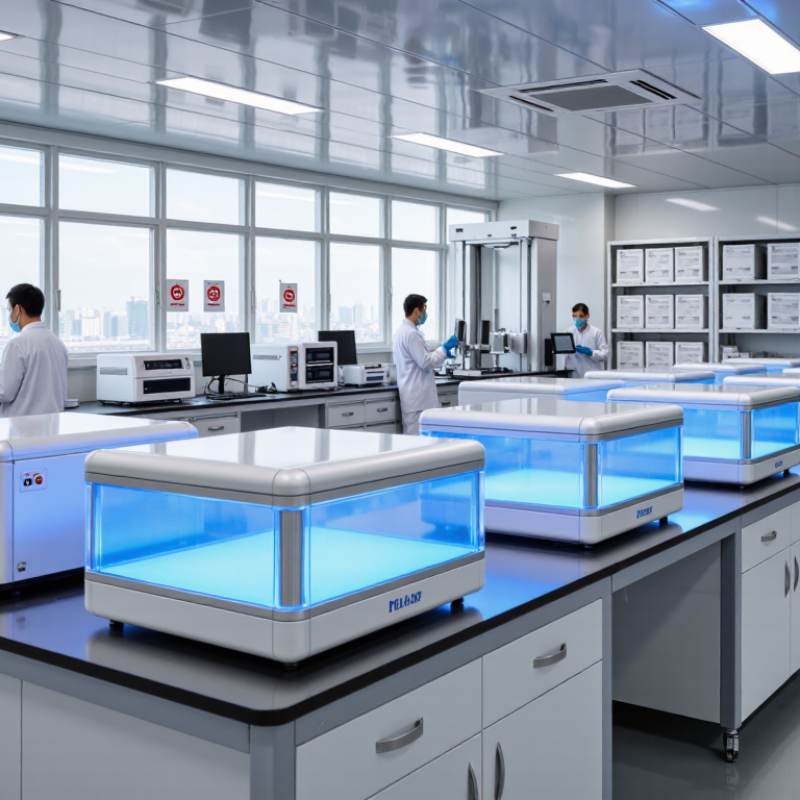
Blue Light Therapy: 415–470 nm Wavelengths and Clinical Uses
China Top Blue Light Therapy Device Manufacturers?
Blue light therapy commonly uses wavelengths from 415 to 470 nm. The exact wavelength affects both treatment response and safety. Around 415 nm, blue light may reduce Cutibacterium acnes activity in acne-prone skin. Longer wavelengths near 450–470 nm are used in controlled medical applications, including neonatal jaundice treatment. Clinical results depend on irradiance, exposure time, treatment distance, and skin condition. Wavelength alone is not enough.
When evaluating Chinese manufacturers, buyers should examine optical calibration, dose consistency, cooling design, and electrical safety documentation. A reliable supplier should provide measured wavelength data, irradiance reports, maintenance guidance, and clear contraindications. Ask whether testing covers the complete device, not only the LED components. Independent verification matters. So does traceability.
In practical assessments, a bright lamp can appear impressive while delivering uneven energy across the treatment area. That weakness may reduce clinical consistency. Eye protection also requires careful design, especially in neonatal and dermatological settings. Manufacturers should explain how their devices limit heat, glare, and accidental exposure. Clinicians still need to select protocols for each patient. Evidence can be incomplete, and marketing language sometimes sounds more certain than the research. That deserves careful review.
How to Rank China Manufacturers by Irradiance, Dose, and Treatment Area
China Top Blue Light Therapy Device Manufacturers?
A serious ranking begins with measured output, not catalogue claims. Ask each manufacturer for spectrometer results near 415 nm, the wavelength often studied for acne-related applications. Published dermatology reviews commonly report blue-light protocols between 8 and 48 J/cm², with treatment schedules varying widely. That variation matters.
Check irradiance at the skin surface, not only at the LED board. A 20 mW/cm² device needs 500 seconds to deliver 10 J/cm². A 40 mW/cm² device needs 250 seconds. The calculation is simple, but testing errors are common. Request measurements from several points, including the panel edges. IEC 62471 also provides a recognized framework for evaluating optical radiation safety.
Treatment area should be verified with a ruler and a calibrated power meter. A larger panel may shorten sessions, yet uneven output can leave visible “hot spots” across the face. Ask for uniformity maps, thermal data, wavelength tolerance, and test conditions. Independent laboratories are preferable, especially when reports follow ISO/IEC 17025 practices. Market analyses from Grand View Research and Fortune Business Insights show continued growth in light-based therapy equipment, but market size does not prove clinical quality. That is an uncomfortable distinction. Some suppliers provide impressive numbers without explaining distance, pulse mode, or measurement uncertainty. Rank documented repeatability higher than the brightest headline figure.
Leading Chinese Device Makers: Products, OEM Capacity, and Market Focus
China’s blue light therapy device sector serves clinics, salons, home users, and private-label distributors. Grand View Research estimates the global LED light therapy market reached about USD 1.1 billion in 2023, with steady growth expected through 2030. Market definitions vary, however. Some reports include infrared systems, while others count only visible-light devices.
Leading Chinese manufacturers usually offer facial panels, handheld wands, acne-treatment masks, and modular clinic units. Their production lines often support private labeling, multilingual packaging, firmware adjustment, and small pilot orders before scale-up. Experienced factories can combine blue, red, and near-infrared LEDs, with timers, eye protection, cooling vents, and treatment logs. A product may look simple. Its testing is not.
OEM buyers should check ISO 13485 quality systems, IEC 60601 safety testing, optical output records, and batch traceability. Independent laboratory reports are more useful than attractive brochures. Some suppliers focus on dermatology clinics, where higher irradiance and replaceable parts matter. Others target home-use beauty products, emphasizing lighter housings, quiet fans, and simple controls. Research from Fortune Business Insights also identifies home-care phototherapy as a growing demand area, driven by convenience and aging consumers.
Chinese production offers strong tooling access and flexible component sourcing, but consistency can weaken between sample and mass production. That risk deserves attention. Ask for repeated irradiance measurements, not one test photograph. Also verify whether marketing claims match the intended market’s regulatory pathway. Surface finish sells the unit; documented performance earns trust.
China Top Blue Light Therapy Device Manufacturers? - Leading Chinese Device Makers: Products, OEM Capacity, and Market Focus
| Supplier Profile | Primary Product Formats | Common Blue-Light Specifications | Typical Applications | OEM / ODM Capacity | Quality and Compliance Support | Main Market Focus |
|---|---|---|---|---|---|---|
| Profile A Clinic-Oriented LED Platform | Desktop panels, tabletop light units, adjustable treatment stands | Blue LEDs commonly centered around 415–470 nm; selectable intensity and treatment timers | Dermatology clinics, aesthetic centers, acne-focused treatment programs | Custom housing, control panels, LED layouts, labeling, packaging, and user-interface languages | Electrical safety documentation, photobiological safety testing, EMC test coordination, technical files | Professional healthcare and aesthetic-device distributors |
| Profile B Flexible Mask Specialist | Silicone or flexible facial masks, portable controllers, rechargeable units | Blue wavelengths frequently specified near 415 nm or within the 415–470 nm range; preset programs | Consumer skincare, home-use acne care, beauty retailers, online channels | Mold customization, mask geometry, battery selection, controller firmware, private-label packaging | Material documentation for skin-contact components, battery testing support, product inspection reports | Home-use beauty and personal-care markets |
| Profile C Handheld Device Manufacturer | Handheld wands, spot-treatment devices, compact rechargeable applicators | Blue LED arrays typically using approximately 415–460 nm; localized output and short treatment cycles | Targeted blemish care, travel use, pharmacy and direct-to-consumer products | Industrial design changes, button layout, charging interface, battery configuration, carton design | Incoming-material inspection, aging tests, battery and charger verification, batch traceability | Portable consumer electronics and skincare channels |
| Profile D Multi-Wavelength Systems Integrator | Full-face panels, masks, and systems combining blue, red, and near-infrared LEDs | Blue channels often around 415–470 nm, combined with red wavelengths commonly near 630–660 nm | Professional facial treatments, multifunctional skincare, salon and clinic platforms | LED wavelength selection, treatment software, cooling systems, stand design, modular accessories | Optical output measurement, thermal testing, EMC coordination, risk-management documentation | International distributors seeking multifunctional platforms |
| Profile E OEM Assembly Partner | Standardized panels, masks, handheld units, and contract-assembled kits | Supplier-selected LED bins with blue output commonly specified between 415 and 470 nm | Private-label product lines, promotional products, distributor starter ranges | Low-to-medium customization, assembly, packaging, logo application, inspection, and fulfillment support | Production samples, assembly inspection, functional testing, carton and label verification | Cost-sensitive export and private-label programs |
| Profile F Regulated-Market Development Partner | Medical-style panels, clinical-use masks, and configurable treatment platforms | Defined wavelength tolerance, irradiance measurement, dosage control, and documented treatment parameters | Healthcare procurement, dermatology networks, clinical research, regulated export markets | Design transfer, verification testing, usability documentation, technical-file preparation, after-sales training | Quality-management procedures, risk analysis, verification records, labeling review, market-specific submission support | Higher-compliance international medical-device markets |
Safety Benchmarks: IEC 60601-1 and IEC 62471 Photobiological Limits
China Top Blue Light Therapy Device Manufacturers?
Safety begins with measurable limits, not attractive wavelength claims. IEC 60601-1:2005+A1:2012+A2:2020 evaluates basic safety and essential performance in medical electrical equipment. Testing covers insulation, leakage current, grounding, and abnormal operation. A device can look simple on a treatment table. Its electrical design is not simple.
IEC 62471:2006 assesses photobiological hazards from lamps and lamp systems. For blue light devices, laboratories examine spectral output, exposure duration, and blue-light weighted radiance. The standard assigns risk groups rather than approving a product automatically. That distinction matters.
A manufacturer should provide calibrated irradiance data, measurement distance, uncertainty, and thermal testing results. Vague “safe for the eyes” language is weak evidence. Independent reports from the International Commission on Non-Ionizing Radiation Protection also stress exposure control through intensity, duration, and distance.
Procurement teams should request an IEC 60601-1 test report and an IEC 62471 assessment from an accredited laboratory. Check whether the report matches the exact model, LED configuration, and treatment head. In practice, small design changes can alter optical output. I have seen specifications that list wavelength but omit irradiance. That is an uncomfortable gap. Safety documentation should also explain eye shielding, user instructions, cleaning procedures, and fault alarms.
Compliance does not prove therapeutic effectiveness. It proves that defined safety requirements were addressed. That difference deserves careful review.
China Manufacturer Comparison: Certifications, LEDs, Warranty, and Service
China Top Blue Light Therapy Device Manufacturers?
China Manufacturer Comparison: Certifications, LEDs, Warranty, and Service
Comparing Chinese blue light therapy device manufacturers requires more than checking product photos. Ask for current certificates, test reports, and the exact factory covered by each document. ISO 13485 can indicate structured medical-device processes, while electrical safety and RoHS documents address different risks. A certificate alone is not proof of clinical performance.
Inspect the LED details closely. Confirm the treatment wavelength, optical output, irradiance, and testing distance. Reliable manufacturers should explain how LEDs are selected, calibrated, and replaced. Ask whether independent laboratories verify the readings. Small differences in distance can change exposure substantially. This detail is often overlooked.
Warranty terms reveal practical reliability. Check coverage for LEDs, power supplies, cooling systems, and controllers. Clarify repair procedures, replacement-part availability, and response times. A two-year warranty sounds useful, but exclusions may weaken it. Request written service commitments before placing an order. Video inspections, sample testing, and batch records can expose inconsistencies. Still, no audit is perfect. A careful buyer should keep questioning impressive claims and compare delivered performance with the original specification.
