What Are the Top Dental Surgical Products From China?
Choosing the top Dental Surgical Products from China requires more than comparing catalogue prices. Clinics should examine clinical purpose, material quality, manufacturing controls, and after-sales support. A low-cost extraction forceps may look polished, yet poor alignment can affect grip during a difficult removal.
This guide introduces commonly evaluated categories, including implant surgical kits, dental handpieces, extraction instruments, bone surgery tools, sutures, and sterilization trays. Stainless steel grade matters. Surface finishing matters too. Even small burrs around a hinged instrument can complicate cleaning and patient safety. Reliable suppliers should provide product specifications, batch information, sterilization guidance, and traceable quality records.
Regulatory checks remain essential. Product registration, labeling, conformity documents, and import requirements vary by market. CE marking, FDA status, or other approvals should never be assumed from a product page alone. Buyers should verify certificates with the issuing body and request samples before placing large orders. Experienced dentists can test balance, vibration, grip comfort, and packaging integrity in realistic procedures.
Details matter.
Supplier audits can reveal more than brochures. Factory hygiene, calibration records, inspection steps, and complaint handling deserve careful review. This article also considers whether manufacturers offer replacement parts, training, and responsive technical assistance. Some evaluations may remain subjective, especially when comfort differs between clinicians. That limitation is worth acknowledging. The strongest choices combine verified compliance, consistent performance, transparent communication, and practical value rather than the lowest quoted price.
What Are Dental Surgical Products and Why Are They Important?
What Are the Top Dental Surgical Products From China?
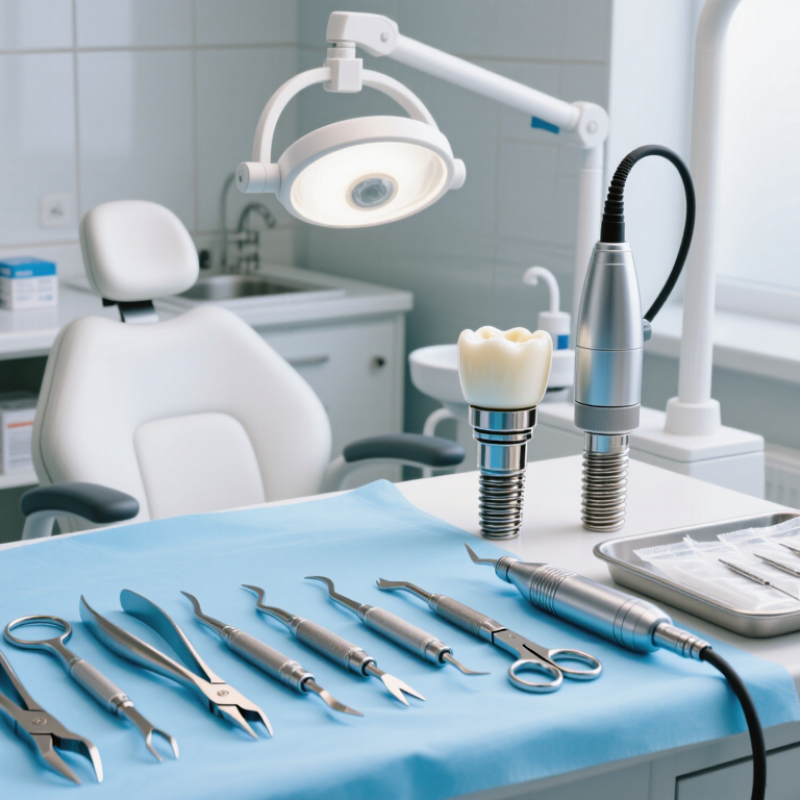
Dental surgical products include instruments and materials used during extraction, implant placement, periodontal surgery, and oral reconstruction. Common Chinese-made categories include extraction forceps, elevators, surgical handpieces, implant surgery kits, bone graft instruments, sutures, and sterilization trays. Their importance is practical: a stable grip, precise cutting edge, and reliable irrigation can reduce tissue trauma and improve procedural control.
The World Health Organization’s Global Oral Health Status Report estimates that nearly 3.5 billion people live with oral diseases. This burden creates continuing demand for safe, accessible surgical equipment. Industry reports also show steady growth in the global dental surgical instrument market, driven by implant treatment, aging populations, and expanding dental access. China’s manufacturing base is especially visible in stainless-steel instruments, rotary devices, surgical accessories, and customized procedure sets.
Quality is more than a polished surface. Dental teams should examine material certificates, sterilization compatibility, lot traceability, packaging seals, and measurable performance data. A loose hinge or poorly balanced elevator can become obvious beside a dental chair. Price alone is a weak shortcut. A lower-cost product may reduce procurement pressure, yet inconsistent finishing can increase replacement and workflow costs. The category is not flawless. Supplier audits, sample testing, and clinical feedback remain necessary, even when documentation appears complete. Claims should be checked against recognized quality systems and applicable medical-device requirements, not accepted from catalog descriptions alone.
Which Types of Dental Surgical Products Are Made in China?
China produces a broad range of dental surgical products for clinics, laboratories, and hospital procurement teams. Common items include extraction forceps, elevators, surgical curettes, bone rongeurs, retractors, and needle holders. Many are made from stainless steel and designed for repeated cleaning and sterilization. Some manufacturers also produce implant surgery kits, osteotomy instruments, surgical handpieces, irrigation needles, suction tips, and sterilization trays.
Instrument design varies considerably. A well-balanced elevator should offer controlled leverage without an uncomfortable handle. Forceps need accurate alignment, smooth hinges, and firm beaks. For implant procedures, drilling kits require clear depth markings and stable connections.
Small details matter, especially when gloves are wet or visibility is limited. In practice, buyers should check material certificates, surface finishing, tolerances, sterilization instructions, and packaging integrity. Production records and quality-control reports can provide useful evidence, but paperwork alone is not enough.
Samples deserve careful testing. Not every polished instrument performs equally well. A curette may feel sharp but lose its edge after repeated cycles. A hinge may appear smooth and develop resistance later. I would compare several batches before approving regular orders. Independent testing can also examine corrosion resistance, dimensional accuracy, and cleaning compatibility. China offers competitive manufacturing capacity, yet product selection should depend on verified performance, regulatory documentation, and the intended clinical procedure, not price alone. Mistakes happen. A realistic evaluation process leaves room for them.
What Materials and Technologies Are Used in Chinese Dental Products?
Chinese dental surgical products increasingly combine familiar materials with digital manufacturing. The WHO Global Oral Health Status Report 2022 estimates that 3.5 billion people live with oral diseases worldwide. This demand encourages suppliers to improve accessibility without ignoring clinical safety.
Common materials include medical-grade titanium for implants and surgical instruments. Zirconia and lithium disilicate support strong, natural-looking restorations. PEEK appears in selected frameworks because it is lightweight and chemically stable. However, material choice should match loading, tissue response, and sterilization requirements. A cheaper material is not automatically a better clinical option.
CAD/CAM workflows are now widely used in Chinese dental laboratories. Intraoral scanning reduces manual impressions, while milling and resin 3D printing improve repeatability. Some facilities also use guided-surgery planning and digital implant libraries. The workflow can still fail. Poor scan data, weak calibration, or incomplete technician training may affect fit.
Tips: Check ISO 13485 certification, traceability records, biocompatibility evidence, and sterilization validation. Ask for batch documentation, not only product photographs. Review clinical feedback from comparable cases. The FDI World Dental Federation stresses prevention and quality care, so digital speed should never replace diagnosis or professional judgment.
What Are the Top Dental Surgical Products From China? - What Materials and Technologies Are Used in Chinese Dental Products?
| Product Category | Typical Materials | Common Technologies | Main Surgical or Clinical Uses | Important Performance Features | Typical Compliance Considerations |
|---|---|---|---|---|---|
| Dental Implants | Commercially pure titanium or titanium alloys; selected systems may use zirconia. | Computer-aided design and manufacturing, precision turning, thread optimization, grit blasting, acid etching, and controlled surface treatment. | Replacement of missing teeth and support for implant-retained crowns, bridges, and overdentures. | Biocompatibility, primary stability, fatigue resistance, corrosion resistance, and predictable osseointegration. | Material traceability, dimensional inspection, sterilization validation where applicable, and conformity with relevant medical-device requirements. |
| Implant Abutments and Prosthetic Components | Titanium, titanium alloy, cobalt-chromium alloy, zirconia, and engineering polymers for selected components. | CNC machining, digital scanning, CAD/CAM milling, laser marking, and tight-tolerance interface manufacturing. | Connection between implants and crowns, bridges, bars, or overdenture attachments. | Accurate implant connection, passive fit, mechanical strength, and soft-tissue-friendly emergence profiles. | Interface compatibility, torque control, alloy documentation, and verification of fit with the intended implant system. |
| Guided Surgery Kits and Surgical Drills | Stainless steel, hardened tool steel, titanium, aluminum, and medical-grade polymers for trays or guides. | CNC grinding, depth-stop machining, laser marking, surgical-guide printing or milling, and digital implant-planning workflows. | Osteotomy preparation, implant placement, and guided implant surgery. | Cutting efficiency, dimensional accuracy, heat control, corrosion resistance, and clear depth identification. | Reusable-device cleaning and sterilization instructions, drill-cycle limits, material certification, and guide accuracy verification. |
| Bone Grafting Materials | Synthetic hydroxyapatite, beta-tricalcium phosphate, biphasic calcium phosphate, or processed biological graft materials where legally permitted. | Controlled particle-size processing, granulation, sintering, porosity control, sterilization, and barrier packaging. | Socket preservation, ridge augmentation, sinus-floor elevation, and periodontal or peri-implant bone reconstruction. | Osteoconductive structure, handling stability, controlled resorption profile, and sterile presentation. | Biological safety, particle and phase characterization, endotoxin control, sterilization validation, and storage-condition control. |
| Barrier Membranes | Collagen, polytetrafluoroethylene, expanded polytetrafluoroethylene, titanium-reinforced polymer, or resorbable synthetic polymers. | Membrane casting, electrospinning, collagen purification, multilayer construction, and controlled sterilization. | Guided tissue regeneration and guided bone regeneration. | Space maintenance, tissue separation, handling strength, biocompatibility, and predictable resorption for absorbable types. | Source and processing controls for biological materials, sterility assurance, degradation testing, and clinical-use labeling. |
| Dental Surgical Handpieces | Stainless steel, titanium, aluminum alloys, engineering polymers, ceramic bearings, and medical-grade seals. | Precision spindle balancing, high-speed bearings, internal irrigation channels, fiber-optic integration, and automated machining. | Tooth sectioning, bone cutting, implant-site preparation, and oral-maxillofacial procedures. | Stable speed, low vibration, cooling efficiency, ergonomic handling, and resistance to repeated sterilization. | Electrical and mechanical safety, validated reprocessing instructions, noise and vibration testing, and sterilization compatibility. |
| Surgical Instruments | Surgical stainless steel, titanium, cobalt-chromium alloys, and medical-grade polymers. | Forging, CNC machining, passivation, electropolishing, laser marking, and surface finishing. | Flap management, extraction, bone contouring, implant placement, suturing, and oral surgery. | Sharp or atraumatic working ends, corrosion resistance, tactile control, dimensional consistency, and sterilization durability. | Steel grade identification, corrosion testing, cleaning validation, packaging integrity, and reusable-device instructions. |
| Sutures and Wound-Closure Products | Polypropylene, nylon, polyester, polydioxanone, polyglactin, or other validated absorbable and non-absorbable polymers. | Multi-filament or monofilament extrusion, precision braiding, needle attachment, coating, and sterile packaging. | Soft-tissue closure after extraction, implant surgery, periodontal surgery, and oral-maxillofacial procedures. | Knot security, tensile strength, handling, predictable absorption, low tissue reaction, and needle sharpness. | Sterility assurance, tensile and needle-performance testing, absorption-profile verification, and package shelf-life studies. |
| Hemostatic Products | Oxidized cellulose, gelatin, collagen, chitosan, or mineral-based hemostatic materials. | Porous-structure control, freeze-drying, fiber formation, absorbency optimization, and sterile packaging. | Control of bleeding after extraction, biopsy, periodontal surgery, and implant procedures. | Rapid fluid absorption, local hemostatic action, conformability, biocompatibility, and appropriate resorption. | Biological safety, sterility, absorption behavior, animal-origin controls where applicable, and contraindication labeling. |
| Surgical Suction and Irrigation Systems | Medical-grade PVC, silicone, polypropylene, polyethylene, stainless steel, and other validated polymers. | Extrusion, molded connectors, leak testing, flow-path design, and sterile or clean-pack assembly. | Removal of blood and debris and delivery of sterile irrigation fluids during surgery. | Consistent flow, kink resistance, secure connections, low leakage risk, and compatibility with surgical equipment. | Biocompatibility, fluid-path cleanliness, packaging integrity, single-use labeling where applicable, and sterilization validation. |
| Digital Surgical Guides and Temporary Components | Validated biocompatible photopolymer resins, PMMA, PEEK, titanium, and other application-specific materials. | Intraoral scanning, cone-beam CT integration, virtual implant planning, CAD/CAM, and additive manufacturing. | Transfer of a planned implant position to the surgical field and fabrication of temporary restorations or components. | Accurate fit, positional control, dimensional stability, biocompatibility, and efficient digital workflow integration. | Validated material use, print-process control, post-curing requirements, cleaning and sterilization instructions, and patient-specific design verification. |
Note: Material selection, product classification, sterilization method, and regulatory requirements vary according to the device design, intended use, and destination market.
How Are Chinese Dental Surgical Products Manufactured and Tested?
Chinese dental surgical products are typically made through controlled manufacturing systems. Common items include extraction forceps, elevators, curettes, surgical handpieces, and implant instruments. Experienced factories begin with documented material specifications. Stainless steel is checked for grade, hardness, corrosion resistance, and surface quality.
Incoming materials are inspected before machining. Cutting, grinding, polishing, and heat treatment follow defined process controls. Small errors matter. An uneven jaw can reduce grip during extraction. Rough polishing may retain contaminants or damage soft tissue. Operators use gauges and calibrated measuring tools to verify critical dimensions. Each production batch should remain traceable to its raw materials and inspection records.
During assembly, workers check alignment, movement, locking force, and sharpness where relevant. Functional testing may include repeated opening cycles or simulated clinical loading. Reusable instruments require cleaning and disinfection studies. Sterile products need validated sterilization processes, sealed packaging, and appropriate shelf-life testing. Biocompatibility assessments are also considered for patient-contacting materials.
Quality teams review nonconforming units instead of hiding them. Supplier audits can reveal weak training, crowded workspaces, or incomplete records. Yet documentation alone cannot prove clinical performance. A practical concern is inconsistent sampling between batches. Manufacturers may pass routine checks while missing rare defects. That gap deserves attention. Clear sampling plans, independent laboratory testing, and post-market feedback provide stronger evidence. Final acceptance should match the intended procedure and applicable regulatory requirements.
How Should Buyers Evaluate Chinese Dental Surgical Product Suppliers?
Chinese dental surgical suppliers offer instruments, implant surgery kits, extraction tools, bone graft instruments, sutures, and sterilization accessories. Buyers should evaluate the supplier, not only the product catalogue. A polished website is not proof of manufacturing capability.
Request clear evidence of quality controls, including ISO 13485 certification, batch traceability, material certificates, and sterilization records. Confirm whether certificates match the actual factory and product category. Ask for inspection reports, packaging specifications, shelf-life data, and instructions for use. These details reveal how carefully the supplier manages real clinical risks. Check compliance requirements in your destination market, because documentation accepted in one country may be insufficient elsewhere.
Sample testing should examine cutting performance, surface finish, corrosion resistance, packaging integrity, and labeling accuracy. For sterile products, inspect seal strength and retain samples from different lots. A video call can show production areas, but an independent factory audit provides stronger evidence. Ask who controls subcontracted processes. This is often overlooked. Pricing also deserves careful review; unusually low quotes may exclude testing, tooling, or replacement support. I would compare delivery records, complaint handling, and response times before signing a large order. No supplier is perfect, and a transparent supplier should discuss limitations rather than promise everything.
Related Posts
-
Elevating Global Standards in Dental Care Through China's Unmatched Manufacturing Quality
-
Exploring Dental Guard Innovations at the 138th China Import and Export Fair 2025
-
7 Essential Tips for Sourcing the Best Dental Products Globally
-
Choosing the Right Dental Guard: A Data-Driven Comparison of Efficacy and Comfort
-
What Makes Whitening Mouthwash a Game Changer for Oral Care
-
Evaluating the Cost-Effectiveness of Reusable Floss Picks: A Comprehensive Market Analysis